Rovix Motion
Choosing a Custom Gear Motor manufacturer can shape a machine’s performance, service life, and maintenance needs. The right supplier should understand more than a requested speed and output torque. Buyers may also need to specify gear ratio, shaft orientation, mounting space, duty cycle, noise limits, and operating temperature. Small details matter. A motor that fits the drawing may still overheat under continuous load or prove difficult to service.
This guide introduces ten manufacturers serving global buyers and compares practical factors, including product range, customization options, technical documentation, and customer support. It also highlights questions worth asking before requesting a quotation, such as whether the supplier can confirm load assumptions, provide dimensional drawings, and explain testing procedures. Public product information can help narrow a shortlist, but it cannot confirm how a motor will perform in every application. That requires careful engineering review. Not every company publishes the same level of detail, and that makes direct comparisons imperfect. This is worth remembering. Treat the list as a starting point, then verify specifications, quality processes, delivery expectations, and after-sales support with each manufacturer. A reliable choice is not always the cheapest or most familiar one; it is the one whose capabilities match the real operating conditions.
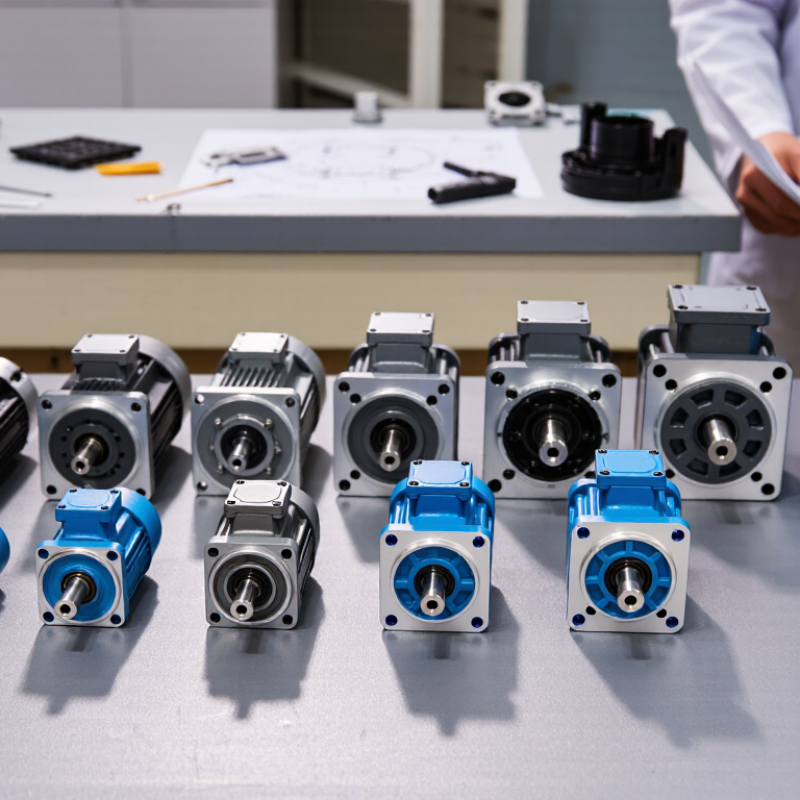
A custom gear motor pairs an electric motor with a gearbox to deliver a chosen speed and torque. The motor creates rotation; the gearbox adjusts it. Simple in concept, but details matter.
Its main components include the stator and rotor, gear train, bearings, output shaft, housing, seals, and lubricant. Gear type and reduction ratio affect noise, efficiency, backlash, and load capacity. Bearings support rotating parts, while seals help keep dust and moisture away from internal components. A practical oversight: a quiet prototype may run hotter after hours under load. Testing should reflect the real duty cycle, not just a brief bench run.
The U.S. Department of Energy’s 2014 Improving Motor and Drive System Performance sourcebook estimates that motor-driven systems use about 68% of electricity consumed in U.S. manufacturing. This figure covers motor-driven equipment broadly, not gear motors alone, but it underlines the value of specifying efficiency carefully. Buyers should define output torque, speed, starting load, operating hours, mounting dimensions, voltage, and thermal limits. A compact housing can save space, yet restrict cooling. That trade-off deserves a real-load test.
When evaluating custom gear motor manufacturers for global sourcing, start with the application, not the catalog. Define required torque, speed, duty cycle, mounting space, and operating temperature. A polished catalog proves little. Ask how the supplier translates those figures into a design, and request drawings that show shaft dimensions, mounting holes, and connector locations. Small details matter.
Review manufacturing controls and test evidence. Request sample inspection records, noise readings, and temperature-rise results under a stated load. Check whether production units are traceable to materials and inspection batches. Then compare the sample against your actual installation, not just a short bench test. A motor can run smoothly for minutes and still overheat during a long shift. No test is perfect.
Global supply also depends on communication and delivery discipline. Ask for realistic lead times, packaging details, spare-part availability, and a named technical contact. Confirm how design changes are documented and approved before mass production. References from buyers with similar volumes can reveal how problems are handled after shipment. A video call is useful, but it cannot replace a factory visit when the order is critical. Be cautious if answers stay vague. Even a capable manufacturer may not be the right fit if its documentation, service hours, or production schedule do not match your team’s needs.
Global sourcing evaluation matrix — a vendor-neutral framework for comparing custom gear motor manufacturers. It does not rank or make claims about specific suppliers.
| Evaluation dimension | What to assess | Evidence to request | Suggested weight | Supplier score (1–5) |
|---|---|---|---|---|
| Application engineering and customization | Ability to configure gear ratio, output torque, speed, mounting, shaft, brake, encoder, and motor options against the application requirements. | Written specification review, drawings, calculation assumptions, and documented design-change process. | 15% | — |
| Product range and operating envelope | Available motor types, gear stages, ratios, torque and speed ranges, mounting positions, and duty-cycle options relevant to the project. | Current technical catalogs and product-specific datasheets; confirm limits for the exact proposed configuration. | 10% | — |
| Quality management system | Documented controls for design, purchasing, production, inspection, nonconformities, and corrective actions. | Valid quality-management-system certificate and scope, audit information, and sample inspection or corrective-action records. ISO 9001 is a widely used QMS standard. | 12% | — |
| Electrical and mechanical compliance | Whether the proposed motor and gear motor meet the destination market’s applicable requirements and the project’s specified ratings. | Product-specific declarations, test reports, nameplate details, and applicable standards. IEC 60034 covers rotating electrical machines; IEC 60529 defines IP enclosure protection ratings. | 12% | — |
| Performance validation and testing | Verification of rated output, torque, speed, current, temperature rise, noise, vibration, and any application-specific endurance requirements. | Test plan, acceptance criteria, calibrated-equipment records, and sample test reports tied to the offered model or configuration. | 10% | — |
| Production capacity and delivery reliability | Capacity for the expected order profile, repeat-order planning, production scheduling, and communication of delivery risks. | Quoted lead times by order stage, capacity-planning details, on-time delivery history, and escalation process. Verify figures against the buyer’s order volumes. | 10% | — |
| Traceability and change control | Ability to identify product revisions, materials, production batches, and approved changes throughout the supply chain. | Sample serial or lot records, revision-controlled drawings, and a documented process for notifying and approving product changes. | 8% | — |
| Export packaging and logistics readiness | Protection against handling and transit risks, packaging suitability, shipping documentation, and clear allocation of logistics responsibilities. | Packaging specification, sample export documents, and a written quotation identifying the agreed delivery term under Incoterms® 2020. | 8% | — |
| After-sales service and spare parts | Technical response process, warranty terms, troubleshooting support, repair capability, and availability of replacement parts. | Written warranty and service terms, support contact process, spare-parts list, and response-time commitments. | 8% | — |
| Total cost and commercial transparency | Total landed-cost components, quotation validity, payment terms, tooling or engineering charges, and assumptions that may affect price. | Itemized quotation, stated currency and validity period, tooling ownership terms, and a breakdown of freight, duties, taxes, and other applicable charges. | 7% | — |
| Total suggested weighting | 100% | — | ||
Scoring method: Rate each supplier from 1 (does not meet requirements) to 5 (fully meets requirements with verifiable evidence). Calculate weighted points as score ÷ 5 × dimension weight. Confirm standards, certificates, delivery estimates, and compliance requirements for the specific product and destination market before purchase.
For global buyers, a top 10 custom gear motor shortlist is most useful when it compares engineering fit, not just price or production volume. Check whether each manufacturer can match your required torque, speed, duty cycle, and mounting space. A compact conveyor drive, for example, may need steady low-speed output and a housing that fits a tight frame. Ask for drawings and operating limits before approving a sample.
Reliable suppliers should explain their design choices and share relevant test data, such as temperature rise, noise, and efficiency under load. Confirm how they handle prototypes, design changes, spare parts, and communication across time zones. Request a written quotation that separates tooling, testing, and unit costs. A polished catalog is not proof of a good match. A neat ranking can hide a mismatch, and buyers should question comparisons that omit application details.
Tips: Send the same specification sheet to all ten candidates. Include load, operating hours, ambient conditions, and available space. Ask for a sample and a clear validation plan before placing a production order.
Comparing custom gear motor manufacturers means looking beyond rated power. Check torque across the full speed range, gear ratio, duty cycle, mounting position, and allowable temperature. A compact conveyor drive may need a quiet helical gearbox; a washdown pump may need sealed housing and corrosion-resistant surfaces. Not just torque. Ask for test data at the actual operating point, not only peak efficiency.
The International Energy Agency’s 2011 assessment of electric motor-driven systems estimates that these systems use about 70% of industrial electricity. That makes efficiency, controls, and thermal design practical buying criteria, not fine print.
The U.S. Department of Energy’s motor-systems guidance also highlights the value of matching motors and drives to their loads. Compare each supplier’s engineering support, prototype process, lead-time transparency, and ability to document performance. A polished specification sheet is useful, but it cannot replace a measured load test.
Customization can include shaft geometry, encoder feedback, brake options, winding voltage, and gear materials. Ask how a manufacturer handles design changes after prototype approval, and whether replacement parts remain available. Request drawings and tolerance details before tooling begins. Small details matter. Still, buyers sometimes over-specify ingress protection or service life without defining the real environment. That can raise cost without improving reliability. Compare proposals against the same duty cycle, ambient temperature, and maintenance assumptions.
For custom gear motors, supplier qualification should begin with the operating point, not a catalog headline. Record output torque, speed, duty cycle, starting load, ambient temperature, and mounting position. A conveyor that runs continuously in a dusty plant needs different checks from an intermittently used actuator. Small details matter: shaft tolerances, cable exit direction, and available clearance can derail installation.
The International Energy Agency’s 2011 report Energy-Efficient Motor Systems estimated that motor-driven systems use about 45% of global electricity. A 2014 U.S. Department of Energy sourcebook put motor-driven systems at roughly 68% of U.S. industrial electricity use. The figures cover different scopes, but they underline why buyers should request efficiency data at the actual operating point. Ask for test conditions, temperature-rise results, noise limits, and documented inspection procedures. Paperwork alone is not proof.
For a sample unit, compare measured speed and current draw with the agreed specification under load. Check backlash and housing temperature after a realistic run. Request component traceability and a clear process for handling design changes. Also verify lead-time assumptions, spare-part availability, and who pays when a sample fails. A polished audit can still miss production variation. I would treat an untested promise as a risk, not a capability.
IEC efficiency class thresholds for a 1.5 kW, 4-pole motor at 50 Hz: IE1 85.3%, IE2 86.5%, IE3 88.2%, and IE4 90.1%. Compare the motor’s rated efficiency and applicable IEC class when qualifying suppliers. These figures refer to the motor, not the complete geared-motor assembly; verify the applicable standard and product specification.
Specify torque, speed, duty cycle, mounting space, and operating temperature. Include a simple drawing. Details matter.
Ask for drawings showing shaft dimensions, mounting holes, and connector locations. Request operating limits and test records too. A catalog is not enough.
Compare it with your actual load and installation. For a conveyor, check low-speed output and available frame space. A brief bench test may miss overheating during a long shift.
Request temperature-rise, noise, and efficiency results under a stated load. Confirm the tested conditions match your operating point. No test is perfect.
Send each candidate the same specification sheet. Ask for tooling, testing, and unit costs separately. A low price can hide a poor fit.
Ask for realistic lead times, packaging details, spare-part availability, and a technical contact. Confirm how design changes are approved before production.
Options include shaft geometry, encoder feedback, brakes, winding voltage, and gear materials. Request tolerance details before tooling begins. Small changes can matter.
Not necessarily. Extra sealing or service-life targets may raise costs without helping your actual environment. I would check the assumptions again.
Ask buyers with similar order volumes how issues were handled after shipment. A video call helps, but critical orders may still justify a factory visit.
This article introduces the structure and essential components of a Custom Gear Motor, explaining how motor type, gear configuration, materials, and performance requirements influence the final design. It also outlines practical ways for global buyers to assess manufacturers, including their engineering capabilities, production quality, customization options, communication, lead times, and ability to support different applications.
The overview compares the capabilities and potential uses of ten manufacturers while emphasizing that the best supplier depends on a buyer’s specific technical and operational needs. It concludes with key qualification and procurement considerations, such as reviewing specifications, confirming quality processes, evaluating costs and delivery expectations, and establishing clear project requirements. By using a structured evaluation process, buyers can make informed sourcing decisions and identify a manufacturing partner suited to their application.
