Rovix Motion Rovix Motion

Top 10 Electric Servo Motor Manufacturers Worldwide

Time:2026-10-20 Author:Liam
0%

Electric Servo Motor technology has become essential in modern automation, robotics, packaging, machine tools, and precision assembly. These motors convert control signals into accurate mechanical movement. They support demanding tasks where speed, torque, repeatability, and rapid response must remain stable throughout long production cycles.

This guide examines ten leading Electric Servo Motor manufacturers worldwide. The selection considers engineering capability, product range, control compatibility, global support, and industrial experience. Practical details matter here. A factory may compare encoder resolution, rated torque, overload capacity, thermal performance, and communication protocols before choosing a supplier. Service availability also matters when a production line stops unexpectedly.

No ranking is perfect. Regional strengths, application requirements, and changing product portfolios can affect the final order. Some manufacturers excel in high-speed robotics, while others focus on heavy machinery or compact automation systems. Independent testing, technical documentation, and verified customer experience provide stronger evidence than marketing claims alone. Specifications can also look impressive on paper but perform differently under heat, vibration, dust, or continuous loading. That is why this overview balances measurable performance with real-world usability. It aims to help engineers, purchasing teams, and system integrators make a clearer comparison. The discussion may not answer every application-specific question, but it offers a reliable starting point for further technical evaluation.
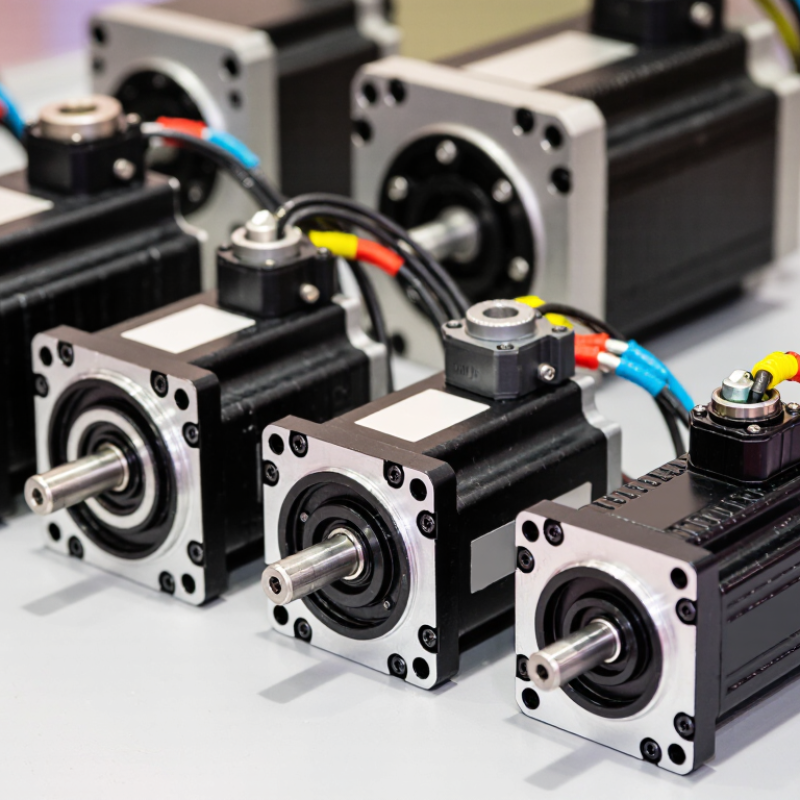
Top 10 Electric Servo Motor Manufacturers Worldwide

What Electric Servo Motors Are and Where They Are Used

Electric servo motors are precision machines that convert electrical energy into controlled rotary motion. Unlike basic motors, they use feedback devices to measure position, speed, and sometimes torque. A drive compares that data with the target command, then adjusts current almost instantly. This closed-loop action helps a shaft stop accurately, even when the load changes.

In manufacturing, servo motors move robotic joints, cutting tools, packaging arms, and inspection tables. They also control conveyor indexing, textile equipment, medical imaging mechanisms, and automated storage systems. Picture a filling machine stopping within a fraction of a millimeter. That repeatability prevents wasted material and uneven output. Servo systems are useful wherever timing, smooth acceleration, and accurate positioning matter.

Choosing one requires more than checking rated power. Engineers examine peak torque, duty cycle, inertia, heat, feedback resolution, and environmental conditions. A motor that works in a clean laboratory may struggle near dust, vibration, or washdown water. My first sizing estimate was too optimistic; acceleration demands briefly exceeded continuous torque. That mistake showed why real load data matters more than a convenient catalog number. Installation also affects performance. Poor alignment can create vibration, noise, and premature bearing wear. Regular checks of connectors, cables, and mechanical backlash improve reliability, although no system is completely maintenance-free.

Top 10 Electric Servo Motor Manufacturers Worldwide – What Electric Servo Motors Are and Where They Are Used

Electric servo motors are closed-loop motors that combine a motor, feedback device and controller to deliver accurate position, speed and torque control. They are widely used in automation systems that require fast response and repeatable motion.

The chart shows representative engineering speed ranges commonly specified for servo-driven applications. Actual ratings vary by motor size, load inertia, duty cycle, gearbox ratio and controller configuration.

Key Criteria for Comparing Global Servo Motor Manufacturers

Comparing the top ten electric servo motor manufacturers requires more than checking rated torque or market visibility. A serious review starts with application fit. Examine continuous torque, peak torque, speed range, encoder resolution, and overload capacity. A motor should hold position accurately during sudden load changes. Ask for measured repeatability, not only catalog claims. Small details matter.

Thermal performance deserves close attention. Compare cooling methods, duty-cycle ratings, insulation classes, and temperature derating. A motor that performs well in a laboratory may lose precision beside a hot gearbox. Check ingress protection, bearing life, vibration limits, and acoustic data. Request test methods and sample reports. Without consistent measurements, comparisons become weak.

Service capability can separate reliable manufacturers from attractive suppliers. Review technical documentation, firmware support, spare-part availability, warranty conditions, and regional response times. Integration also matters. Confirm compatibility with the intended drive, feedback system, communication network, and safety architecture. Factory audits or pilot testing provide useful evidence, though they cost time. The cheapest quotation may hide commissioning delays. I have seen specifications look complete while maintenance instructions remained vague. That should invite further questions, not immediate rejection. A practical comparison weighs performance, lifecycle cost, delivery stability, and evidence from comparable installations. Data sheets help. Field experience decides.

Leading Electric Servo Motor Manufacturers by Market Presence

Market presence in electric servo motors is broader than annual sales. It reflects installed systems, regional service coverage, distributor reach, and integration expertise. Fortune Business Insights valued the global servo motor market at approximately USD 6.6 billion in 2023. Its forecast points toward continued growth through 2032, driven by robotics, packaging, electronics, and precision machinery.

The leading manufacturers usually support several voltage classes, feedback systems, and communication protocols. Their products must perform reliably beside heat, vibration, dust, and frequent acceleration cycles. The International Federation of Robotics reported 541,302 industrial robot installations worldwide in 2023. That volume increases demand for compact motors, responsive drives, and dependable maintenance networks. Presence becomes visible on factory floors.

Regional strength still matters. A manufacturer may dominate automation projects in one continent but have limited repair capacity elsewhere. Local stock, trained engineers, and replacement-part availability can influence purchasing decisions more than a small efficiency advantage. MarketsandMarkets identifies industrial automation and robotics as important growth drivers for servo systems, although published market estimates vary by product definition. That inconsistency deserves attention.

A practical ranking should examine more than revenue. It should compare global shipments, application diversity, service response, product lifecycle support, and verified customer adoption. Certification records and independent performance tests add credibility. Marketing claims alone are weak evidence. Even established suppliers can struggle with software compatibility or delayed field support. That is an uncomfortable, but useful, part of the assessment.

Top 10 Electric Servo Motor Manufacturers Worldwide - Leading Electric Servo Motor Manufacturers by Market Presence

Rank Anonymous Manufacturer Primary Market Presence Core Application Coverage Typical Servo Output Range Feedback Technologies Industrial Network Support Market Presence Indicator
1 Manufacturer A Global; strong Asia, Europe and North America coverage Robotics, packaging, machine tools and factory automation 50 W–15 kW Incremental and absolute encoders EtherCAT, PROFINET, Ethernet/IP and CANopen Very High
2 Manufacturer B Global; extensive European and Asian distribution Semiconductor equipment, assembly and precision motion 30 W–11 kW High-resolution optical and magnetic feedback EtherCAT, Mechatrolink, PROFINET and EtherNet/IP Very High
3 Manufacturer C Global; particularly strong in Europe and the Americas General automation, printing, converting and material handling 100 W–22 kW Resolver, incremental and absolute encoders PROFINET, EtherCAT, Modbus TCP and CANopen High
4 Manufacturer D Global; broad presence in Asia and emerging markets Packaging, textile machinery, electronics and conveyors 50 W–7.5 kW Incremental and 17–23 bit absolute encoders EtherCAT, PROFINET, EtherNet/IP and pulse train High
5 Manufacturer E Global; established industrial channel network Machine tools, robotics, motion control and factory systems 200 W–30 kW Absolute encoders and resolver-compatible options EtherCAT, PROFINET, CC-Link and MECHATROLINK High
6 Manufacturer F Global; strong North American and European presence Packaging, labeling, food processing and material handling 100 W–15 kW Incremental and absolute encoder feedback EtherNet/IP, EtherCAT, PROFINET and Modbus TCP Medium-High
7 Manufacturer G Global; rapidly expanding international distribution CNC equipment, robotics, 3D printing and automation 200 W–11 kW Incremental, magnetic and multi-turn encoders EtherCAT, CANopen, Modbus RTU and pulse train Medium-High
8 Manufacturer H Asia-Pacific focused with growing global reach Electronics assembly, packaging and compact machinery 50 W–5 kW Incremental and high-resolution absolute encoders EtherCAT, PROFINET, Modbus TCP and pulse train Medium
9 Manufacturer I Regional strength with selected global markets Special-purpose machinery, lifts and mobile automation 100 W–18.5 kW Incremental encoders, resolvers and Hall sensors CANopen, EtherCAT, Modbus and pulse train Medium
10 Manufacturer J Strong domestic base with expanding export coverage Textile, packaging, inspection and light industrial automation 50 W–7.5 kW Incremental and single-turn absolute encoders EtherCAT, Modbus RTU, CANopen and pulse train Medium

Note: Rankings are presented without company or brand names. Product ranges and interface availability represent commonly documented specifications across leading industrial servo-motor suppliers and may vary by product series, region and configuration.

Core Technologies and Product Features Across Major Brands

Top 10 Electric Servo Motor Manufacturers Worldwide: Core Technologies and Product Features Across Major Brands

The leading manufacturers compete through control precision, energy efficiency, and integration rather than motor size alone. The International Energy Agency reports that electric motor systems consume nearly 50% of global electricity. This makes efficiency a practical purchasing issue. Current product lines commonly use permanent-magnet rotors, high-resolution absolute encoders, and digital current control. These features improve positioning, reduce overshoot, and support faster machine cycles. EtherCAT, PROFINET, and other industrial networks also simplify synchronized motion across multiple axes.

Demand is rising with factory automation. The International Federation of Robotics recorded 541,302 industrial robot installations worldwide in 2023. Many robotic joints depend on compact servo packages with high torque density, low backlash, and thermal monitoring. Leading systems now offer safe torque off, vibration detection, regenerative braking, and IP-rated housings. Some models combine the drive and motor, reducing cabinet space and wiring. However, catalog specifications can mislead. Peak torque may last only seconds, while continuous torque reflects real production limits. That detail deserves closer review.

Tips: Compare continuous torque, peak torque, encoder resolution, and overload time. Check cable length, braking requirements, and network compatibility before selection. Test the motor under actual inertia and duty cycles. A perfect specification rarely exists. Field commissioning may expose resonance, heat, or tuning problems that laboratory figures cannot show. Reassess the choice after measuring noise, settling time, and energy use on the production line.

Industry Applications and Factors Influencing Manufacturer Selection

Top 10 Electric Servo Motor Manufacturers Worldwide

Industry Applications and Factors Influencing Manufacturer Selection

Electric servo motors support accurate motion in packaging, robotics, machine tools, medical equipment, and automated warehouses. A packaging line may require rapid indexing, while a robotic arm needs smooth torque control at low speed. Those priorities differ. Motor selection should begin with load data, duty cycles, acceleration, ambient temperature, and required positioning accuracy.

A reliable manufacturer should provide verified torque curves, thermal limits, encoder options, and controller compatibility. Engineers should also examine service coverage, spare-part availability, training, and repair response times. In dusty workshops, sealed housings and suitable ingress protection matter. In clean production areas, noise, vibration, and maintenance procedures may matter more. Compliance with recognized safety and performance standards adds useful evidence, but certificates alone cannot prove real-world suitability.

In factory evaluations, a spreadsheet can hide practical problems. A motor may meet peak torque requirements yet overheat during repeated cycles. The smallest model may look efficient, but limited overload capacity can reduce production stability. Requesting sample testing, application references, and measured energy data helps reduce uncertainty. Selection teams should involve operators and maintenance technicians, not only purchasing staff. Their experience often reveals cable failures, difficult connectors, or software limitations. Some decisions remain imperfect. A balanced review of performance, lifecycle cost, supplier expertise, and local support usually provides stronger results than choosing by purchase price alone.

FAQS

What does market presence mean for an electric servo motor manufacturer?

It includes installed systems, service coverage, distributor reach, and integration experience. Sales alone provide an incomplete picture.

Which industries commonly use electric servo motors?

Common applications include robotics, packaging, machine tools, medical equipment, and automated warehouses. Each application demands different motion behavior.

What technologies are common in modern servo motors?

Permanent-magnet rotors, absolute encoders, digital current control, and industrial communication networks are widely used. These features improve positioning and synchronization.

How should engineers compare servo motor performance?

Compare continuous torque, peak torque, encoder resolution, overload time, and thermal limits. Peak torque may last only seconds.

Why is continuous torque important?

Continuous torque reflects sustained production capability. A motor can meet peak requirements yet overheat during repeated cycles.

What environmental conditions affect servo motor selection?

Heat, vibration, dust, moisture, and frequent acceleration cycles can affect reliability. Sealed housings and suitable ingress protection may be necessary.

How important are service and replacement parts?

Local engineers, spare parts, training, and repair response can matter more than a small efficiency advantage. Delays can stop production.

Should a servo motor be tested before purchase?

Yes. Test actual inertia, duty cycles, settling time, noise, vibration, and energy use. Catalog data may not reveal commissioning problems.

Can certificates prove that a servo motor fits an application?

Certificates provide useful evidence, but they cannot prove real-world suitability. Field conditions remain important.

Who should participate in servo motor selection?

Engineers, operators, maintenance technicians, and purchasing staff should review the choice. Operators often notice cable, connector, or software problems first.

Conclusion

Electric Servo Motor systems are precision-driven motion solutions designed to control speed, torque, and position with high accuracy. They are widely used in industrial robots, CNC machinery, packaging equipment, assembly lines, medical devices, and automated logistics. This article explains how servo motors operate, why feedback systems are essential, and how they improve productivity, repeatability, and energy efficiency in demanding applications.

It also presents the key criteria for comparing leading global manufacturers, including product reliability, control performance, motor range, software compatibility, technical support, customization options, and long-term operating cost. Major suppliers are evaluated by market presence, engineering capability, and the breadth of their motion-control portfolios. The discussion highlights common technologies such as integrated sensors, advanced drives, network communication, and intelligent diagnostics, while also examining how application requirements, environmental conditions, load characteristics, installation space, maintenance needs, and industry regulations influence the final manufacturer selection.

Liam

Liam

Liam is a dedicated marketing professional with a profound expertise in the industry, where he excels at highlighting the unique advantages of our core products. With a keen understanding of market trends and consumer needs, Liam frequently updates our company’s professional blog, providing......