Rovix Motion Rovix Motion

What Are the Top 10 Compact Gear Motor Types?

Time:2026-09-20 Author:Liam
0%

Compact Gear Motor technology is quietly shaping conveyors, medical devices, packaging lines, robotics, and automated doors. Its value is simple: strong torque inside a restricted space. Yet “compact” does not mean universally efficient.

Market estimates show steady industrial demand. MarketsandMarkets reports that the global gear motors market could grow from approximately USD 22.4 billion in 2023 to USD 28.5 billion by 2028. Grand View Research also identifies continued growth, although its market boundaries and figures differ. That difference matters. Reports do not always measure the same products, regions, or motor categories.

As motion-control engineer Jörg Niermann of NORD DRIVESYSTEMS has stated, “The drive solution must be designed for the application, not selected from a catalogue alone.” This principle guides the following review. The top 10 types include planetary, spur, helical, worm, bevel, cycloidal, harmonic, right-angle, brushless DC, and stepper gear motors.

Each design creates a different compromise. A planetary unit can deliver high torque from a small housing. A worm gear can hold a load, but often loses efficiency through sliding contact. A brushless DC version supports clean, controlled operation, while a stepper gear motor offers positioning without a complex feedback system.

The ranking is not absolute. That is worth admitting. Noise, backlash, thermal limits, duty cycle, mounting space, and service access can change the best choice. A 60-millimeter conveyor motor may need quiet helical gearing, while a compact robotic joint may demand harmonic or planetary reduction. This guide compares those practical differences using manufacturer specifications, engineering principles, and current industry data.
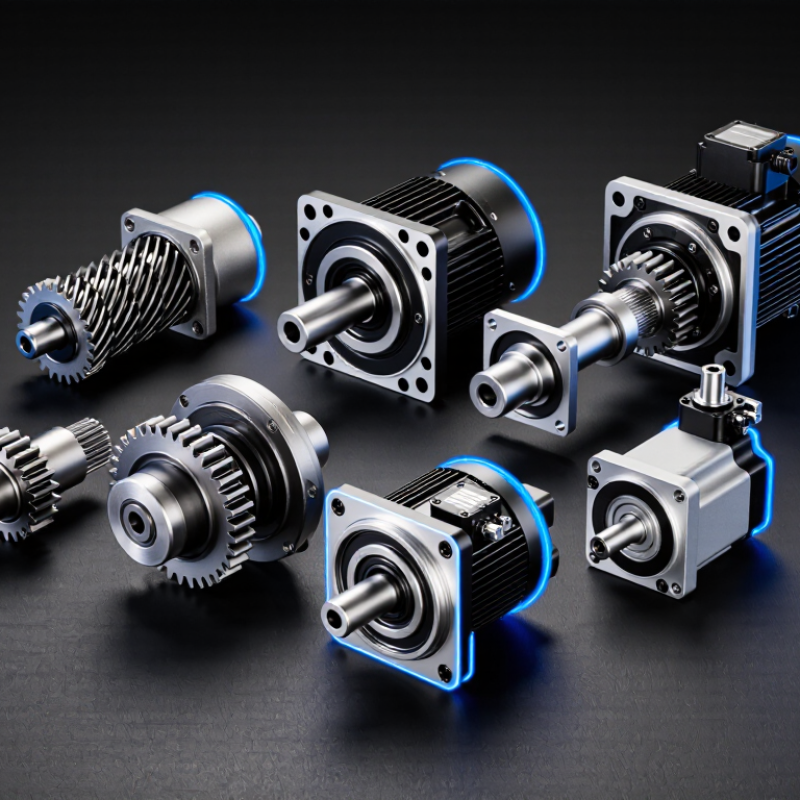
What Are the Top 10 Compact Gear Motor Types?

What Defines a Compact Gear Motor and Its Main Advantages

A compact gear motor combines an electric motor and a speed-reducing gearbox in one short assembly. Its small footprint comes from integrated housing, optimized tooth geometry, and high power density. The main advantage is simple: more torque fits into limited space.

The ten common compact types are spur, helical, planetary, worm, bevel, hypoid, cycloidal, harmonic, parallel-shaft, and right-angle gear motors. Spur units offer low cost and straightforward maintenance. Helical designs run more quietly. Planetary units deliver high torque in a short body. Worm gears provide strong reduction, but they can lose more energy through friction. Compact does not always mean efficient.

The International Energy Agency reports that electric motor systems consume nearly half of global electricity. The U.S. Department of Energy also estimates that motor systems represent about 70% of industrial electricity use. These figures make gearbox efficiency important, even in small equipment. In practical machine design, engineers should check starting torque, duty cycle, heat dissipation, backlash, noise, and service life. A motor that fits perfectly may still fail under repeated starts. That is an easy detail to miss.

For conveyors, medical mechanisms, automated valves, and laboratory instruments, planetary and helical gear motors often balance size, efficiency, and control. Right-angle and worm units suit tight layouts. However, published efficiency values may reflect ideal test conditions, not dusty, hot, or frequently overloaded operation. Real selection requires measured load data and a clear safety margin.

How Compact Gear Motors Are Classified by Gearbox Design

Compact gear motors are commonly classified by gearbox design, not motor size alone. The ten main types include spur, helical, planetary, bevel, worm, hypoid, cycloidal, harmonic, parallel-shaft, and coaxial gearboxes. Each design changes torque, speed reduction, noise, efficiency, and installation space.

Spur gearboxes are simple and affordable, but their teeth can sound sharper at higher speeds. Helical gears run more quietly and handle heavier loads. Planetary gearboxes provide high torque in a short housing.

Bevel and hypoid designs transfer motion through an angle, useful when the motor must fit beside the driven shaft. Worm gearboxes offer strong reduction and compact right-angle mounting, although friction can create noticeable heat.

Cycloidal units tolerate shock loads well. Harmonic designs deliver precise positioning, but they may cost more. Parallel-shaft gearboxes support narrow machine layouts, while coaxial units keep input and output aligned.

In practice, the “best” type depends on load cycles, space, backlash, and cooling. I have found that selecting by diameter alone often causes avoidable performance problems.

Tips:
Check the gearbox’s rated torque at the actual output speed. Measure starting load, not only running load. Leave room for heat dissipation. A small fan or metal mounting plate can reduce temperature rise. Also inspect backlash requirements carefully; compact does not always mean precise. Manufacturer test data is useful, but real installation conditions still deserve verification.

The Top 10 Compact Gear Motor Types and Their Key Features

Compact gear motors solve a practical problem: delivering controlled torque where installation space is limited. The IEA’s Energy Efficiency 2023 report states that electric motor systems consume about 53% of global electricity. Efficiency therefore matters, even in small machines. The ten common types are spur, helical, bevel, worm, planetary, cycloidal, harmonic, hypoid, parallel-shaft, and right-angle gear motors.

Spur gear motors offer low cost and simple maintenance, but produce more noise.

Helical units run more quietly and handle higher loads.

Bevel designs change rotation direction efficiently.

Worm gear motors provide high reduction ratios and useful self-locking, although heat can reduce efficiency.

Planetary models deliver high torque in a short housing.

Cycloidal types resist shock loads and suit demanding duty cycles.

Harmonic drives provide extremely precise positioning. They are compact, but often expensive.

Hypoid gear motors combine quiet operation with strong torque transmission.

Parallel-shaft versions fit narrow conveyors.

Right-angle designs save installation space around corners.

The U.S. Department of Energy identifies motor-driven systems as a major industrial energy opportunity, reinforcing the value of efficient transmission design. Market research reports commonly forecast steady growth for the gear motor sector through the decade, driven by automation, material handling, and compact robotics.

Still, selecting by torque alone is a mistake. Duty cycle, backlash, lubrication, thermal limits, and output speed can change the result. Real testing is essential. A catalog rating may look perfect, yet fail under repeated starts.

How to Compare Compact Gear Motors for Different Applications

What Are the Top 10 Compact Gear Motor Types?

Compact gear motors differ in torque, speed, efficiency, noise, and installation flexibility. Common types include spur, helical, planetary, worm, bevel, cycloidal, harmonic, hypoid, shaft-mounted, and right-angle gear motors. Each design suits a different mechanical problem. Spur gear motors are affordable and simple, but their teeth can produce noticeable noise. Helical units run more smoothly and handle continuous loads better. Planetary models provide high torque in a short housing. Worm gears offer strong reduction and useful self-locking, though efficiency may be lower.

Compare compact gear motors against the actual working conditions, not only catalogue ratings. Check required output torque during startup, not just normal operation. A conveyor carrying a heavy tray may need twice its running torque for a brief moment. Review speed range, duty cycle, backlash, shaft load, and available mounting space. Also examine heat buildup inside the enclosure. Small housings can become surprisingly warm.

Measure twice. Then test.

For precise positioning, low backlash matters more than maximum torque. For lifting equipment, holding behavior and brake compatibility deserve closer attention. Helical and planetary designs often fit efficient, continuous motion, while right-angle and bevel units simplify crowded layouts. Environmental exposure also changes the choice; dust, moisture, and cleaning chemicals may require better sealing. I have seen projects fail after selecting a motor from nominal power alone. That shortcut ignores acceleration, shock loads, and service life. A practical comparison should include noise measurements, gearbox efficiency, replacement access, and the controller’s electrical limits before final installation.

What Are the Top 10 Compact Gear Motor Types? — How to Compare Compact Gear Motors for Different Applications
Rank Compact Gear Motor Type Typical Gear Ratio Typical Output Torque Typical Efficiency Backlash Key Advantages Typical Applications Best Selection Criteria
1 Brushed DC Spur Gear Motor 3:1–100:1 0.02–10 N·m 65–85% Medium Low cost, simple control, compact axial design, and good availability across many voltage ranges. Small conveyors, valves, locks, dispensers, toys, office equipment, and battery-powered mechanisms. Choose when cost, compact size, and basic speed control are more important than positioning accuracy.
2 Brushed DC Planetary Gear Motor 4:1–200:1 0.05–25 N·m 75–90% Low to medium High torque density, balanced load sharing, and better durability than a comparable spur gearbox. Robotics, electric actuators, medical devices, compact pumps, and portable automation equipment. Choose when high torque, shock resistance, and a small diameter are required.
3 BLDC Planetary Gear Motor 3:1–150:1 0.1–40 N·m 80–92% Low to medium Long service life, high speed capability, efficient operation, and reduced brush maintenance. AGVs, laboratory equipment, robotics, fans with gear reduction, and continuous-duty machinery. Choose when duty cycle, operating life, efficiency, and electronic commutation are important.
4 Worm Gear Motor 7:1–300:1 0.5–100 N·m 35–80% Medium to high Large reduction in one stage, right-angle mounting, quiet operation, and potential holding capability. Gates, lifts, turntables, conveyors, positioners, and low-speed handling systems. Choose when high reduction and right-angle packaging are needed; verify heat dissipation and back-drivability.
5 Helical Gear Motor 3:1–100:1 1–250 N·m 85–96% Low to medium Quiet meshing, high efficiency, smooth transmission, and strong continuous-load performance. Compact conveyors, packaging machinery, mixers, feeders, and factory automation. Choose when continuous operation, low noise, and efficient power transmission are priorities.
6 Bevel Gear Motor 2:1–100:1 2–300 N·m 80–95% Low to medium Efficient 90-degree power transmission, flexible mounting, and good torque capacity. Right-angle conveyors, packaging lines, material-handling systems, and compact machine axes. Choose when the motor and output shaft must be arranged at a right angle without the efficiency loss of a worm drive.
7 Hypoid Gear Motor 5:1–100:1 3–350 N·m 75–92% Low to medium Compact right-angle geometry, high torque capacity, and smoother operation than many conventional bevel arrangements. Mobile equipment, compact transport systems, automation platforms, and heavy-duty positioning units. Choose when packaging space is limited and high torque is required at a right angle.
8 Stepper Planetary Gear Motor 3:1–100:1 0.2–30 N·m 70–90% Low to medium High holding torque, predictable incremental motion, and easy integration with stepper motor control systems. 3D printers, pick-and-place equipment, indexing tables, CNC accessories, and laboratory instruments. Choose when controlled incremental movement and holding torque are more important than maximum running efficiency.
9 Servo Planetary Gear Motor 3:1–100:1 1–500 N·m 90–97% Very low to low High positioning accuracy, excellent repeatability, strong acceleration capability, and rigid mechanical response. Robotic joints, CNC axes, indexing systems, inspection machines, and high-speed automation. Choose when accuracy, dynamic response, low backlash, and closed-loop control justify a higher system cost.
10 Harmonic Strain-Wave Gear Motor 30:1–160:1 2–300 N·m 70–90% Very low Exceptional compactness, high reduction in one stage, near-zero backlash, and high positional repeatability. Robot joints, optical systems, semiconductor equipment, gimbals, and precision motion platforms. Choose when minimal backlash and high reduction are essential; account for limited shock-load tolerance and cost.
Typical ranges are provided for comparison only. Actual performance depends on motor power, operating speed, duty cycle, lubrication, thermal conditions, mounting orientation, load inertia, and gearbox size. Confirm continuous torque, peak torque, allowable radial and axial loads, backlash, service life, and thermal limits before final selection.

Which Compact Gear Motor Best Fits Your Space, Torque, and Speed Needs

What Are the Top 10 Compact Gear Motor Types?

Which Compact Gear Motor Best Fits Your Space, Torque, and Speed Needs?

Choosing a compact gear motor starts with the installation envelope. Spur, helical, planetary, worm, bevel, hypoid, cycloidal, harmonic, parallel-shaft, and right-angle motors each solve different constraints. Space changes everything. Spur gears suit low-cost, moderate-load mechanisms. Helical gears run more quietly and support smoother continuous motion. Planetary designs deliver high torque from a short housing, making them useful for robotics and precision equipment.

Worm motors offer strong reduction ratios and can resist back-driving, but efficiency may fall during long duty cycles. Bevel and hypoid units redirect motion through tight corners. Cycloidal and harmonic types handle high reduction ratios where backlash matters. Parallel-shaft motors fit narrow conveyor frames, while right-angle units simplify crowded layouts. Measure the mounting area, shaft direction, duty cycle, and heat path before comparing rated torque.

Industry data supports careful selection. MarketsandMarkets projected the global gear motors market to reach about USD 29.3 billion by 2028, reflecting continued demand for compact automation drives. A 2024 Grand View Research analysis also identified automation and material handling as important growth applications. These reports describe market direction, not a guarantee for every machine.

In practice, rated torque can mislead when starts, shock loads, or frequent reversals are ignored. A motor that fits perfectly may still overheat. I have seen compact designs fail because speed was prioritized over thermal capacity. Choose the smallest practical motor, then verify torque, efficiency, noise, backlash, and service life under real operating conditions.

FAQS

What is a compact gear motor?

It combines an electric motor and a reducing gearbox in one short housing. Its small footprint provides useful torque where installation space is limited. More torque per centimeter.

What are the main compact gearbox types?

Common designs include spur, helical, planetary, worm, bevel, hypoid, cycloidal, harmonic, parallel-shaft, and coaxial types. Each changes speed reduction, noise, efficiency, backlash, and mounting space.

Which gear motor works well for high torque in a short body?

A planetary design often provides high torque within a compact housing. It suits conveyors, automated mechanisms, and other equipment with limited depth. Check actual output torque carefully.

When is a helical gear motor a suitable choice?

Helical gears usually operate more quietly than spur gears and handle heavier loads. They can suit laboratory instruments and controlled automation. Quiet operation still depends on alignment and lubrication.

Are worm gear motors always the most efficient compact option?

No. Worm gears offer strong reduction and convenient right-angle mounting. However, friction can create heat and reduce efficiency. Compact does not always mean efficient.

How should I select a compact gear motor?

Check output torque at the required speed, not only the motor’s rated power. Measure starting load, duty cycle, backlash, noise, temperature, and expected service life. Running load alone can mislead you.

Why is heat dissipation important in a small gear motor?

Small housings have less surface area for releasing heat. Repeated starts, overloads, and friction may raise temperature quickly. A metal mounting plate or small fan can help. Heat still wins.

Can published efficiency data predict real performance?

Not always. Test results may use clean, cool, and lightly loaded conditions. Dust, heat, misalignment, or frequent overloads can reduce performance. I would verify the motor under real installation conditions.

Conclusion

A Compact Gear Motor combines a small electric motor with a reduction gearbox to deliver controlled torque in limited spaces. Its main advantages include space efficiency, reliable motion, lower energy consumption, reduced mechanical complexity, and easier integration into automated equipment. Compact gear motors can be classified by gearbox design, such as spur, planetary, helical, worm, bevel, and cycloidal systems. Each design offers a different balance of efficiency, torque capacity, noise, durability, and back-driving resistance.

The top 10 compact gear motor types include spur, planetary, helical, worm, bevel, hypoid, cycloidal, harmonic, parallel-shaft, and right-angle gear motors. When comparing them, users should consider output torque, speed range, duty cycle, efficiency, backlash, noise, mounting space, environmental conditions, and maintenance needs. The best choice depends on the application: planetary and helical types suit high efficiency and precision, worm designs support compact right-angle transmission, while spur and parallel-shaft options offer simplicity and economical performance. Evaluating available space, required torque, operating speed, and load behavior will help identify the most suitable solution.

Liam

Liam

Liam is a dedicated marketing professional with a profound expertise in the industry, where he excels at highlighting the unique advantages of our core products. With a keen understanding of market trends and consumer needs, Liam frequently updates our company’s professional blog, providing......